 English
 Kinyarwanda

Kivu Belt Water Supply System Transforms Lives in Karongi
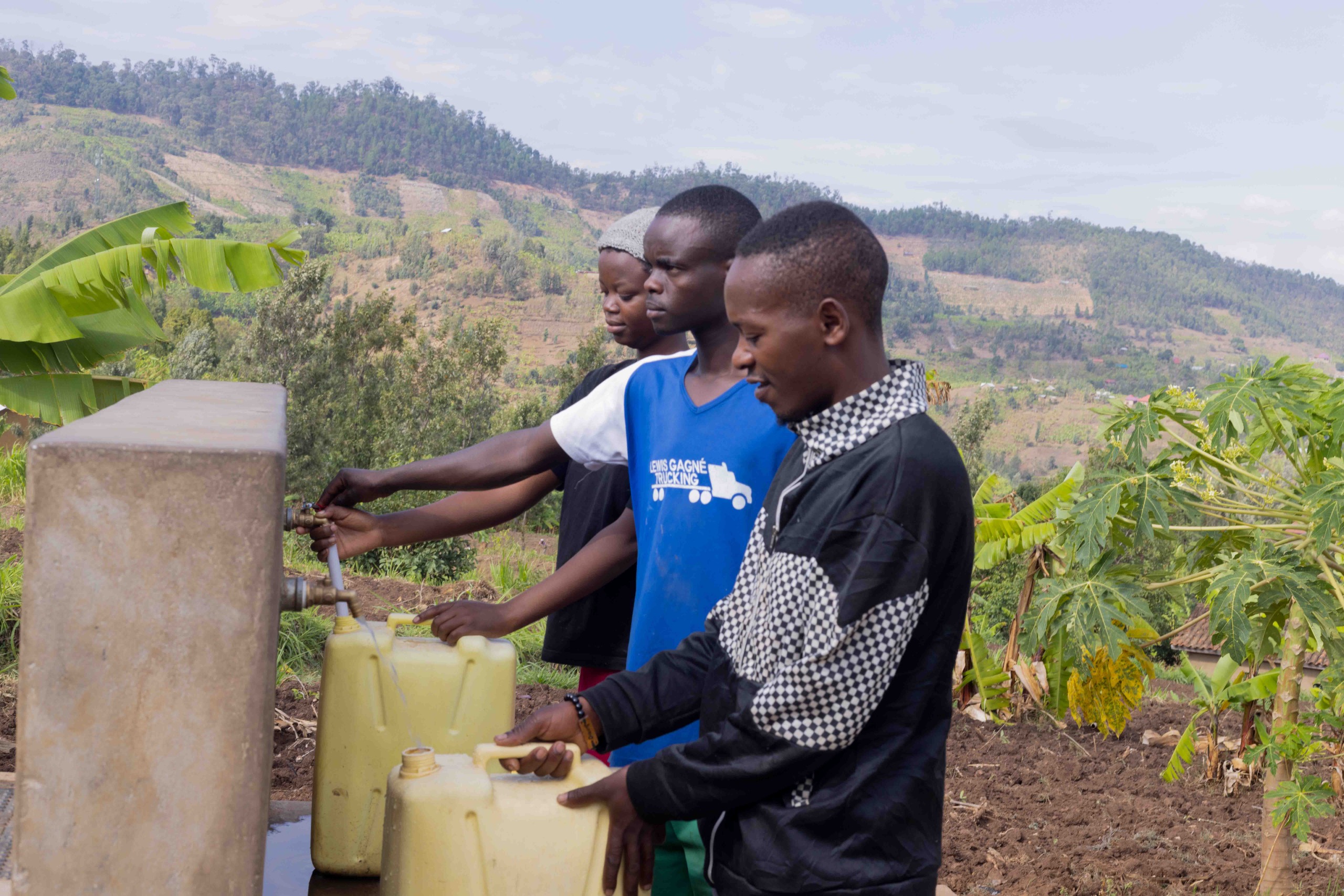
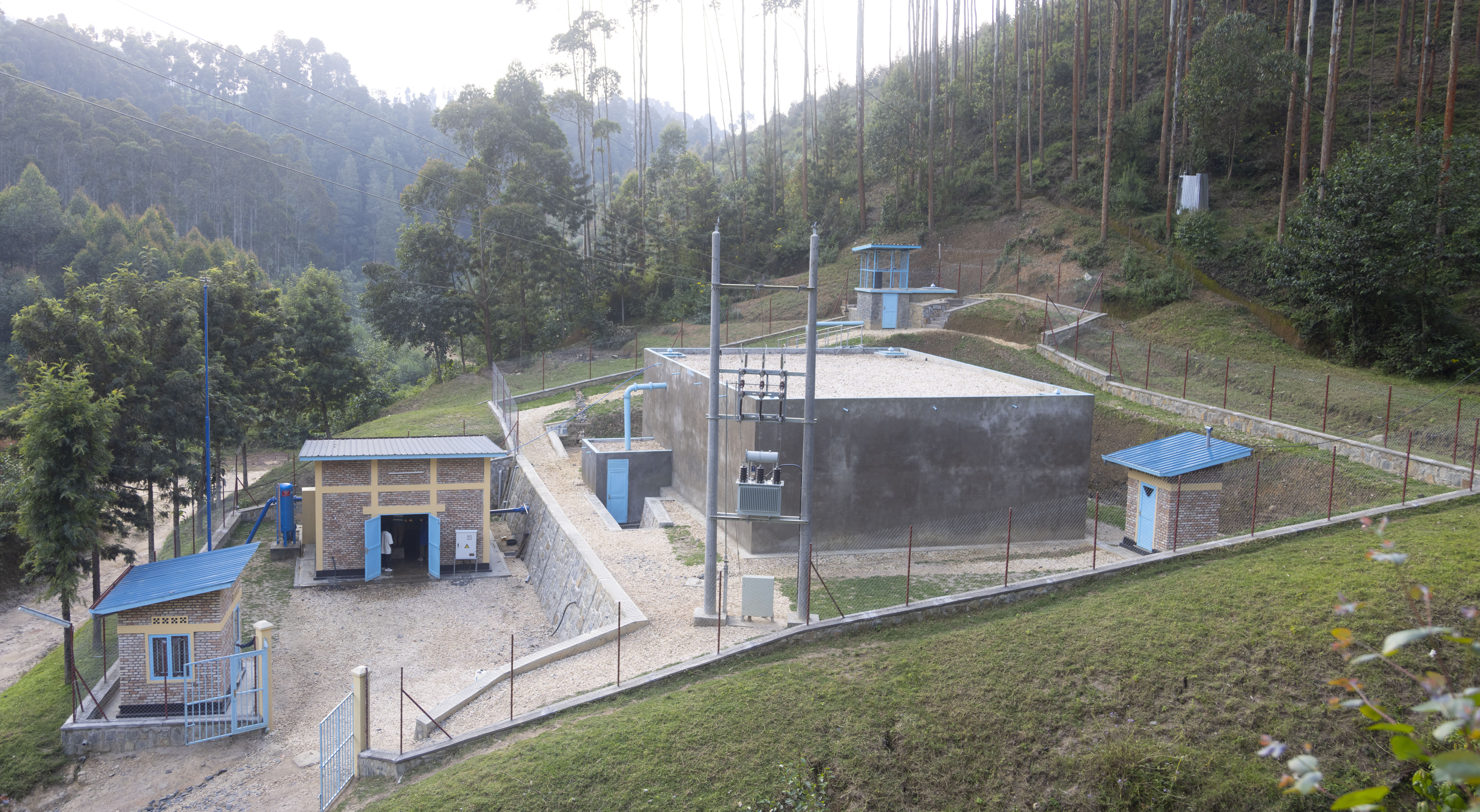
The plant is part of the Kivu Belt Water Supply System, a major infrastructure project aimed at improving access to safe and reliable water in Karongi District, particularly in Bwishyura and Rubengera, two of the district’s most densely populated sectors.
At the heart of the project is a water treatment plant with a production capacity of 13,000 cubic metres per day, significantly increasing the availability of safe drinking water for residents in the targeted areas.
Residents Celebrate Improved Access to Clean Water
Residents say the new water supply has eased longstanding challenges associated with accessing clean water and has improved their daily lives.
“It was difficult to get water. We used to get water from rivers, which was dirty and caused waterborne diseases. We are thankful to the leadership of our country and WASAC Group for providing clean water, which is improving our health,” said Uwimana Fulgence, a resident of Kibilizi Cell in Rubengera Sector who has connected his home to the new water supply. “We are now receiving a constant water supply and no longer have to rely on rationing. We could spend two weeks without water, but now we have a reliable supply,” he added.
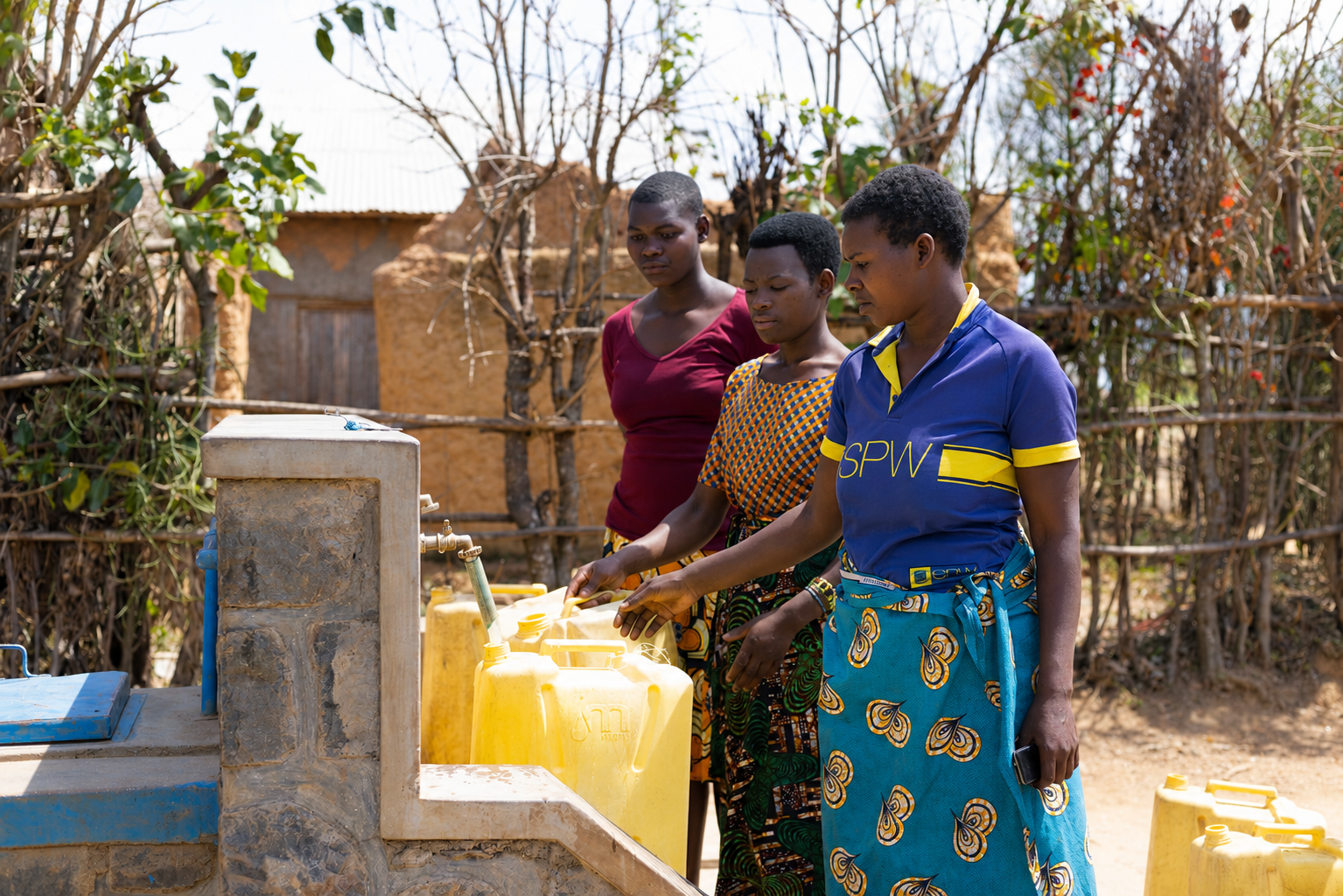
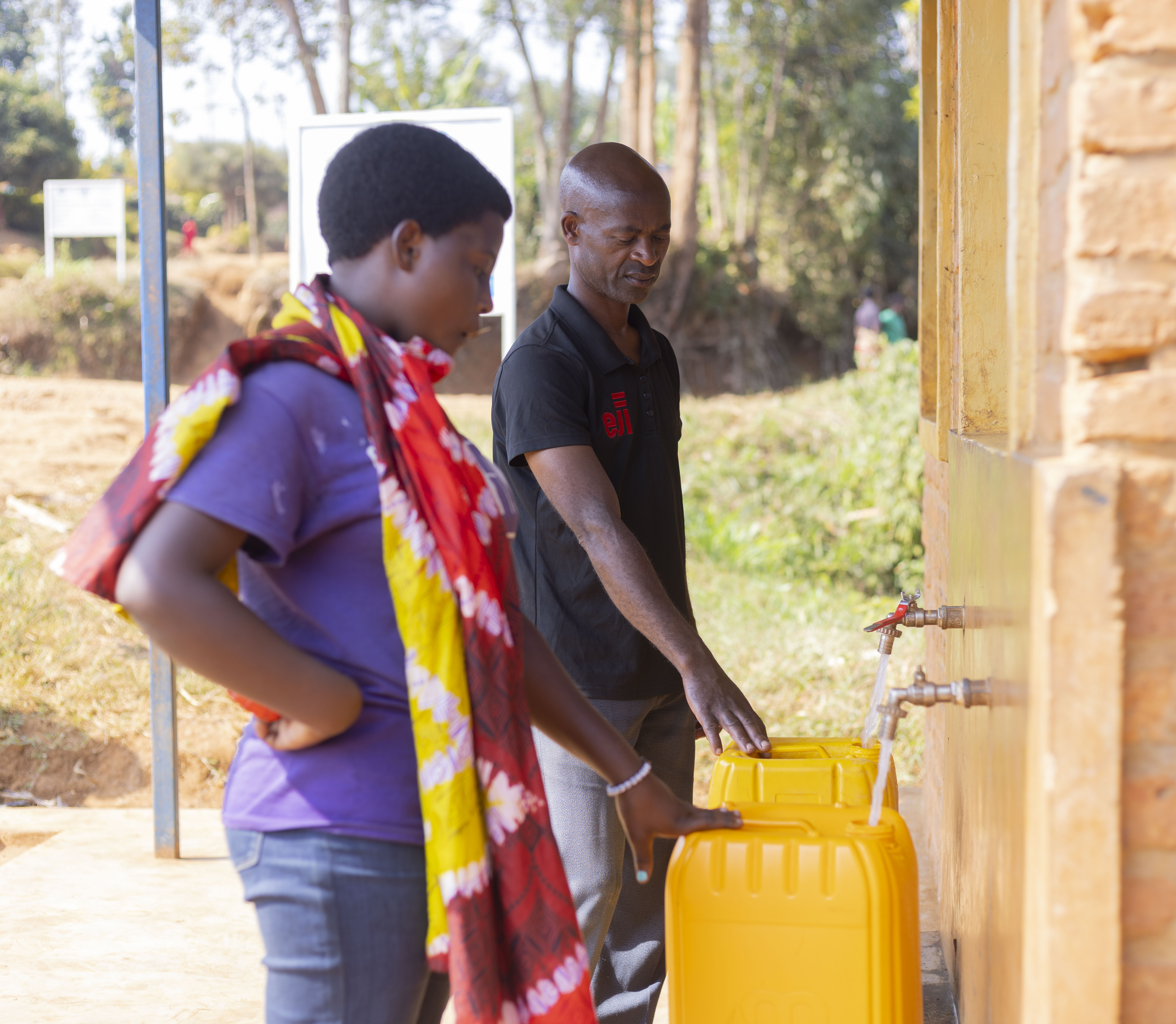
Ingabire Clemence, another resident, said the new water system has also reduced the time and money households spend fetching water. “We used to spend almost an hour fetching water from the valley, which was a long distance. Water was expensive, especially for vulnerable people, as they used to pay 200 Rwandan francs for a Jerrycan,” she said. “We are now relieved, and our lives have changed because we no longer spend hours, a lot of money, or travel long distances to find water. Water taps are close to our homes, and we only pay 20 francs for a jerrycan. Children no longer miss classes while searching for water. It is easy to find water for drinking and cleaning, something which is improving hygiene and sanitation,” Ingabire added.
Schools and Health Facilities Gain Improved Water Access
Institutions, including schools and health facilities, have also benefited from the implementation of the Kivu Belt Water Supply System.
Priest Daniel Nshimyumukiza, Head teacher of G.S Kibilizi in Rubengera Sector, said the school, which has more than 1,000 students, previously struggled with an inadequate water supply.
“Before the school was connected, it depended on the old water system, which was not sufficient. Sometimes we had to send students to fetch water for use at school, which made them spend time that could have been used for studying,” he said. “With the new water connection, the school now has enough water for cooking, cleaning, and drinking. This ensures that meals are served on time and creates a better learning environment for students. We are grateful to everyone who contributed to this project,” Nshimyumukiza added.
Karongi District officials have described the Kivu Belt Water Supply System as a landmark infrastructure project that provides a sustainable response to longstanding water challenges in Bwishyura and Rubengera sectors.
Ntakirutimana Julienne, Vice Mayor of Karongi District in charge of Economic Development, said the project is already contributing to improvements in hygiene and sanitation while supporting local businesses.
“We consider this project a mega initiative of great value. It has improved hygiene and sanitation for residents, as well as for businesses such as restaurants, bars, and hotels, by ensuring a reliable and consistent water supply,” she said. “We deeply appreciate our collaboration with WASAC Group for their continued support in addressing water supply challenges,” Ntakirutimana added.
The Kivu Belt Water Supply System was implemented by the Water and Sanitation Corporation (WASAC Group) from July 2023 to April 2026, with funding from the African Development Bank.The project supports Rwanda’s National Strategy for Transformation (NST2), which aims to achieve universal access to clean water and improved sanitation by 2029.

In addition to the treatment plant, the project includes a 96.5-kilometre pipeline network designed to transport treated water across the targeted sectors. The system also features multiple water reservoirs to improve storage and distribution, as well as 86 public water taps. For residents who previously spent hours searching for water, the new system represents more than an infrastructure upgrade. It means shorter journeys, lower costs, improved hygiene, and more reliable access to one of the most essential services in their daily lives.
Other Posts
27/08/2026
Clean Water Access Expanded in Huye as Four Water Supply Systems Are Rehabilitated
Huye, 27 August 2026. More than 23,300 residents in Rwaniro, Karama, Gishamvu, and Huye Sectors of Huye District, as well as Nyagisozi Sector in Nyanza District, are benefiting from the rehabilitation and extension of four water supply systems covering a total of 72.042 kilometres of water pipelines.
04/08/2026
Improved Water Access Transforms Lives in Nyamagabe
Nyamagabe, 04 August 2026. More than 48,000 residents of Kitabi, Tare, Uwinkingi and Kibirizi sectors in Nyamagabe District, are now benefiting from improved access to clean, safe following the successful reinforcement and upgrade of the Mabende–Rwufe Water Supply System.
20/07/2026
Rehabilitation of Water Systems Boosts Water Access to 86.4% in Nyaruguru District
Nyaruguru, 20 July 2026. The rehabilitation and upgrading of 10 water supply systems in Nyaruguru District has significantly expanded access to clean water, increasing water service coverage from 72% to 86.4% across the district.
03/07/2026
Rehabilitated Water Supply Systems Improve Water Access for Nearly 43,000 People in Rusizi
Rusizi, 03 July 2026. Nearly 43,000 residents in the Nkanka, Gihundwe, Giheke, and Gikundamvura sectors of Rusizi District have gained improved access to clean water following the completion of the rehabilitation of two major water supply systems: Rusayo–Rwabuto–Nkanka and Cyafuku–Kibangira–Kiziguro I & II.